

Why do joints pop?
We've all experienced those strange popping sounds our joints can make. Whether it's our knuckles, knees, or even our back. These sounds can be quite attention-grabbing.
But what causes them, and should we be concerned?
In this article, we'll dive into the fascinating reasons behind joint popping. Then explore some causes and most importantly, we'll offer three simple ways to prevent our joints from popping.
Let's start with some science:
The Science Behind Joint Popping
Before we jump into prevention methods, let's understand why joints pop in the first place.
Here are 3 simple facts backed by scientific research:
-
Gas Bubble Release
The most common cause of joint popping is the release of gas bubbles. When we crack our knuckles or other joints, we're changing the pressure inside the synovial fluid.
(A lubricating fluid that keeps our joints moving smoothly)
This pressure change can cause gas bubbles to form quickly within the synovial fluid. When the joint surfaces separate quickly, a gas-filled cavity forms in the fluid, and that is when we hear the familiar popping sound.[1]
In 2015, a study published in the journal "PLOS ONE" used an MRI to capture the formation and bursting of these gas bubbles during knuckle cracking.
This revealed that the popping noise happens as a gas-filled cavity suddenly forms inside the joint fluid. Now let's move on to the second reason.

-
Tendons and Ligaments
Another reason why joint popping occurs is when tendons and ligaments snap over bony parts.
Think of it like stretching and then quickly releasing a rubber band. That's similar to what happens in our joints.
This snapping action can produce a popping sound, especially in areas like our knees and ankles.
Now let's move on to the last reason.
-
Arthritic Changes
Sometimes, joint popping is associated with arthritis.[2]
Arthritis is a painful condition where the cushioning between our bones, known as cartilage, deteriorates.
When this cartilage becomes rough or breaks down, it can create more friction within the joint.
This increased friction can result in popping or cracking sounds when we move.
A 2018 study in Arthritis Care & Research found that people who often noticed knee crackling were more likely to develop knee arthritis. And found this distinct connection to be pretty common.
Pay close attention to these popping noises as you age. If popping comes with pain or swelling, mention it to your doctor.
Now that we've uncovered the mysteries behind joint popping. Let's discuss 3 methods to prevent it and keep our joints feeling and sounding healthier:
3 Methods to Prevent Joint Popping:
Method 1: Stay Hydrated
One of the easiest ways to prevent joint popping is to ensure you're well-hydrated. Proper hydration is key for maintaining the lubricating properties of synovial fluid in our joints.
The key here is to be hydrated with the right stuff though. Not soda, or other sugary drinks. But simply water, nothing beats water.
Tip: Aim to drink at least 6-8 glasses of water daily. And consider including hydrating foods like watermelon and cucumber in your diet.
Method 2: Maintain a Healthy Weight
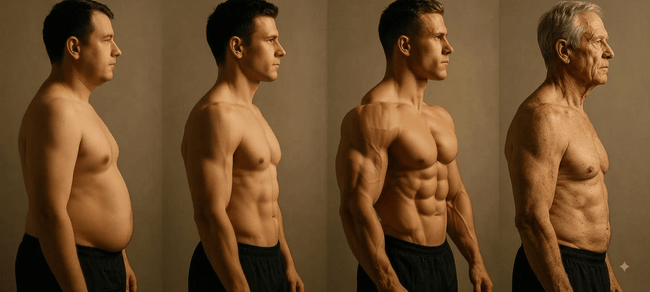
Excess body weight can place added stress on our joints, particularly the ones that bear our weight, such as our knees and hips.[3] This increased stress can contribute to joint instability and popping.
By maintaining a healthy weight through a balanced diet and regular exercise. We reduce the workload on our joints and lower the likelihood of popping sounds.
Tip: Consult a healthcare expert or nutritionist for a personalized plan for maintaining a healthy weight.
Method 3: Engage in Joint-Friendly Exercises
Regular physical activity is essential for overall joint health. However, it's essential to select exercises that are gentle on our joints.
Low-impact activities like swimming, cycling, and pilates help strengthen the muscles surrounding our joints, without causing strain.
This is what gives longevity to those seniors you see jogging every Sunday morning for the last 20 years. They know what they're doing, they're taking care of those joints.
Conclusion:
Joint popping may seem mysterious, but it's typically harmless. By understanding why it happens and following these simple tips, you can keep your joints in excellent condition.
Remember to stay hydrated, maintain a healthy weight, and choose exercises that are gentle on your joints.
Our joints are designed to serve us well throughout our lives. So taking care of them is key to a long life of wellness.
I want to add one last thing. Let’s call it a bonus.
This is something you can easily do every morning. And it’s an easy addition to a joint-friendly routine.
And that is by taking a high-quality turmeric blend.
A lot of turmeric blends contain low-quality turmeric. Or not enough curcumin to effectively help your joints absorb the benefits.
Not ours though.
Our high-quality blend comes out of the box with everything your joints need. If you want to ease the pressure our joints experience every day.
And you want to go the organic route, by using scientifically proven ingredients.
Tap below to get your first bottle of Joint Health
Sources
- Kawchuk GN, Fryer J, et al. Real-time visualization of joint cavitation. PloS one. 2015. PubMed
- Lo GH, Strayhorn MT, et al. Subjective Crepitus as a Risk Factor for Incident Symptomatic Knee Osteoarthritis: Data From the Osteoarthritis Initiative. Arthritis care & research. 2018. PubMed
- Messier SP, Gutekunst DJ, et al. Weight loss reduces knee-joint loads in overweight and obese older adults with knee osteoarthritis. Arthritis and rheumatism. 2005. PubMed

 Applied!